If you’ve ever kept chickens—or just chatted with someone who does—you’ve probably noticed that there are less eggs in winter as the days get shorter. It’s a totally normal part of the chicken-keeping year, and it’s especially noticeable if you have free range or rescue hens or if you enjoy eating free range eggs from Newtons(!)
Here’s why the egg slowdown happens, and what makes rescue chickens a bit different.
It’s All About the Light
Chickens are powered by sunlight. Their bodies are wired to lay eggs when the days are long and bright (spring and summer), and to take a break when the daylight hours shrink (autumn and winter). This natural cycle helps them conserve energy and stay healthy for the next laying season.
Less daylight = fewer eggs: Chickens need about 14–16 hours of light per day to keep laying steadily.
Shorter days signal “rest mode”: As autumn rolls in and the sun sets earlier, hens’ bodies naturally slow down or stop egg production.
The Free Range Factor
Free range chickens, unlike those kept indoors with artificial lighting, are exposed to the true rhythms of the seasons. While this is fantastic for their wellbeing and natural behaviours, it also means their egg production is more closely tied to the changing light.
No artificial boosts: Indoor flocks might get extra light to trick their bodies into laying all year, but free range hens follow nature’s lead.
More time spent foraging: Cooler weather and shorter days mean hens spend less time scratching outside, and more time keeping warm.
Rescue Chickens: A Special Case
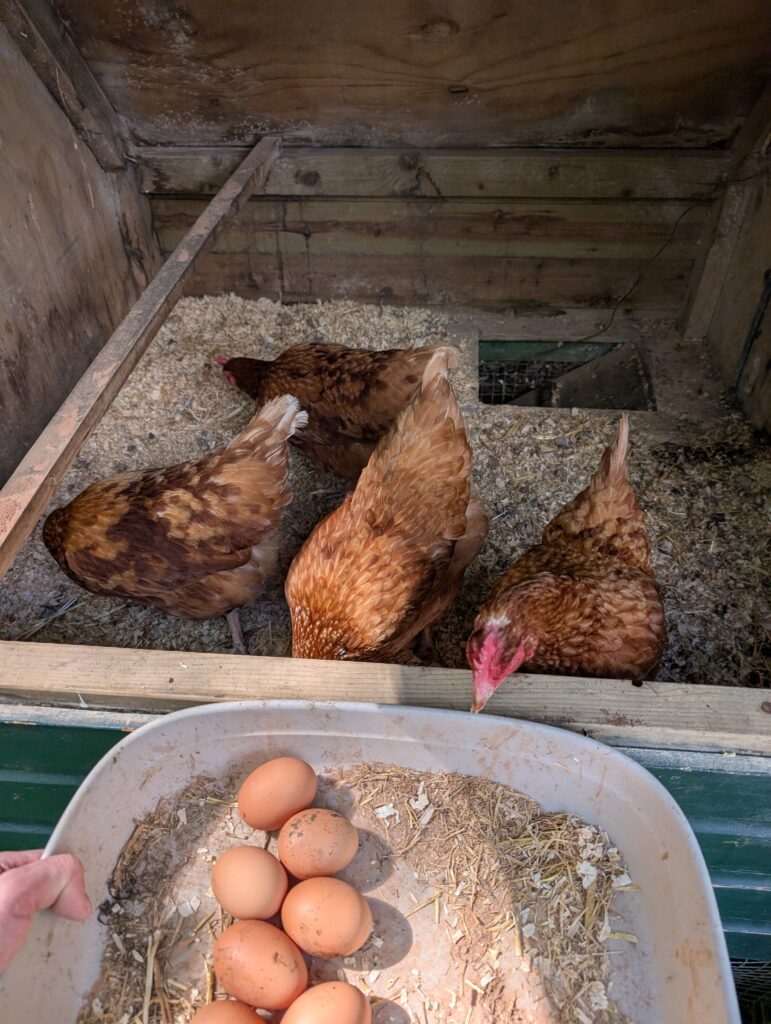
Rescue chickens—often ex-commercial hens—come with their own unique set of challenges and quirks:
1. Past Laying Demands
High production early on: Commercial hens are bred and managed to lay almost every day while young (often with artificial lighting).
Early burnout: By the time they’re rescued, their bodies may be a bit worn out, needing time to recover.
2. Adjusting to Real Life
Learning to be chickens again: Many rescue hens have never scratched in the grass, felt the sun, or even roosted properly.
Energy goes into recovery: Instead of eggs, their bodies focus on growing new feathers, building strength, and healing.
3. Seasonal Sensitivity
Extra rest needed: Rescue hens are often more sensitive to seasonal changes and need the downtime that autumn and winter bring.
How You Can Help Your Hens
If you’re caring for free range or rescue chickens, here are a few ways to support them through the colder months:
Good nutrition: Make sure they have access to plenty of quality feed and fresh water.
Shelter: A dry, draft-free coop helps them stay warm and healthy.
Patience: Trust the process—your hens will likely start laying again as the days get longer.
The Bigger Picture
Supporting rescue chickens and letting them follow their natural rhythms is all part of a more ethical, sustainable approach to animal care.
Got questions about rescue hens, egg production, or anything else chicken-related? Drop us a line, we’re always happy to chat all things feathered and sustainable and we occasionally host Chicken Meet and Greet at The Eden-field Project.